
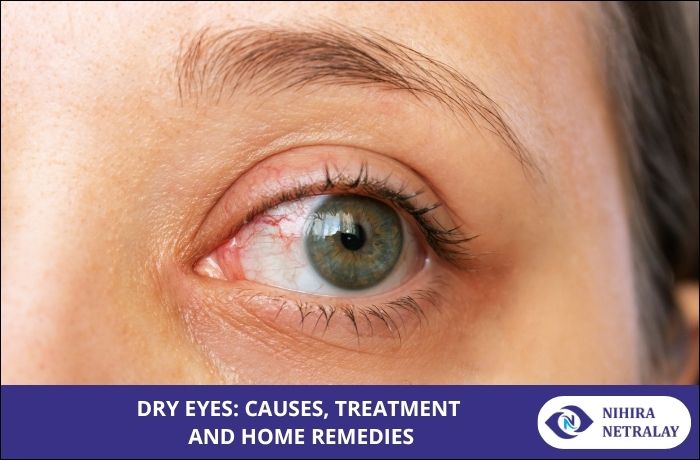
Dry eyes are a common condition that affects millions of people worldwide. Many people experience occasional dryness after spending long hours in front of a computer, using a smartphone, or staying in an air-conditioned environment. However, when dry eyes become a regular problem, they can affect daily activities such as reading, driving, and working.
Dry eye occurs when your eyes do not produce enough tears or when the tears evaporate too quickly. Tears are essential because they keep the surface of the eyes smooth, comfortable, and protected from infections.
Understanding the causes, symptoms, treatment options, and home remedies can help you manage the condition and protect your eye health.
What Is Dry Eye Syndrome?
Dry eye syndrome is a condition in which the eyes cannot maintain a healthy tear film. The tear film consists of three layers:
- Water Layer : This layer provides moisture and keeps the eyes hydrated.
- Oil Layer : This layer prevents tears from evaporating too quickly.
- Mucus Layer : This layer helps tears spread evenly across the surface of the eye. If any of these layers become unbalanced, dry eye symptoms can develop.
What Causes Dry Eyes?
Several factors can contribute to dry eyes.
1. Aging
As people grow older, tear production naturally decreases. Dry eyes are more common in adults over the age of 50.
2. Excessive Screen Time
People often blink less while using computers, smartphones, or tablets. Reduced blinking can cause tears to evaporate more quickly.
3. Environmental Factors
Exposure to air conditioning, smoke, dust, pollution, strong winds, and dry climates can increase tear evaporation.
4. Contact Lens Use
Wearing contact lenses for long periods may reduce eye moisture and cause irritation.
5. Certain Medical Conditions
Health conditions that may contribute to dry eyes include:
- Diabetes
- Rheumatoid arthritis
- Thyroid disorders
6. Medications
Some medications can reduce tear production, including:
- Antihistamines
- Antidepressants
- Blood pressure medications
- Decongestants
Common Symptoms of Dry Eyes
Dry eye symptoms can vary from person to person. Some of the most common symptoms include:
- Burning sensation
- Eye redness
- Itching
- Blurred vision
- Sensitivity to light
- Watery eyes
- A feeling of having something stuck in the eye
- Eye fatigue
Many people are surprised to learn that excessive tearing can also be a sign of dry eyes. When the eyes become dry and irritated, they may produce reflex tears that do not provide long-lasting lubrication.
How Are Dry Eyes Diagnosed?
An eye specialist can diagnose dry eyes through a comprehensive eye examination.
1. Tear Production Test
This test measures the amount of tears produced by the eyes.
2. Tear Film Evaluation
Your doctor may examine the quality and stability of your tear film.
3. Eye Surface Examination
Special dyes can be used to identify damage to the surface of the eyes. Early diagnosis is important because untreated dry eyes can increase the risk of infections and damage to the cornea.
Treatment Options for Dry Eyes
Treatment depends on the underlying cause and severity of the condition.
1. Artificial Tears
Lubricating eye drops are usually the first line of treatment. They help maintain moisture and reduce discomfort.
2. Prescription Medications
In some cases, doctors may prescribe medications that reduce inflammation and improve tear production.
3. Punctal Plugs
These tiny devices are inserted into the tear ducts to prevent tears from draining too quickly.
4. Lifestyle Changes
Simple lifestyle adjustments can significantly improve dry eye symptoms.
These include:
- Taking regular breaks while using digital devices
- Staying hydrated
- Avoiding smoke and dust
- Using a humidifier indoors
Home Remedies for Dry Eyes
Several home remedies can help relieve symptoms and improve eye comfort.
1. Follow the 20-20-20 Rule
Every 20 minutes, look at an object 20 feet away for 20 seconds. This reduces eye strain and encourages blinking.
2. Apply a Warm Compress
Placing a warm compress over the eyes can improve the function of the oil-producing glands.
3. Increase Omega-3 Intake
Foods rich in omega-3 fatty acids may help improve tear quality.
Examples include:
- Salmon
- Flaxseeds
- Walnuts
4. Stay Hydrated
Drinking enough water throughout the day supports overall eye health.
5. Limit Direct Air Exposure
Avoid sitting directly in front of fans, air conditioners, and heaters.
When Should You See an Eye Specialist?
You should consult an eye specialist if you experience:
- Persistent eye pain
- Severe redness
- Blurred vision that does not improve
- Difficulty performing daily activities
- Symptoms that continue despite using eye drops
Ignoring dry eye symptoms can lead to complications and affect your quality of life.
Meet Dr. Ankita Patil for Dry Eye Treatment in Navi Mumbai
If you are experiencing persistent eye irritation, redness, or blurry vision, consulting an experienced eye specialist is important. Dr. Ankita Patil provides Dry Eye Treatment in Navi Mumbai at Nihira Netralaya. With advanced diagnostic techniques and patient-focused care, Dr. Ankita Patil helps patients find effective and long-lasting relief from dry eye symptoms while protecting their overall eye health.
