
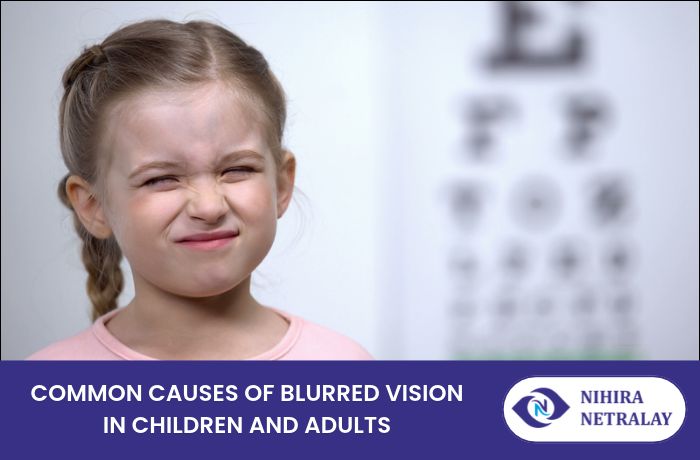
Blurred vision is most commonly caused by refractive errors such as myopia, hypermetropia, astigmatism and presbyopia, followed by dry eyes, digital eye strain, cataract, diabetes-related eye changes, glaucoma and eye infections or inflammation. Some causes are simple to correct with spectacles, while others need medical treatment. Blurred vision that comes on suddenly, affects one eye, or comes with pain, flashes or a shadow in vision needs urgent care. A complete eye examination by an ophthalmologist is the dependable way to find the reason.
This article explains the common causes of blurred vision in children and adults, signs that need attention and how the cause is diagnosed.
What Does Blurred Vision Mean?
Blurred vision means objects look unclear or out of focus. It can affect distance vision, near vision or both, in one eye or both eyes. It may be constant, come and go, or appear only at certain times such as while reading or at night.
Common Causes of Blurred Vision
1. Refractive errors
These happen when the eye does not focus light correctly on the retina.
- Myopia (short-sightedness): distant objects look blurry. It often starts in school-age children.
- Hypermetropia (long-sightedness): near objects may be unclear, and children may have eye strain or headaches.
- Astigmatism: vision is blurred or distorted at all distances.
- Presbyopia: after about 40 years of age, reading small print becomes harder.
A refraction test identifies the power needed. For children, our page on managing increasing spectacle power may be helpful.
2. Digital eye strain
Long hours on phones, tablets and computers reduce blinking and keep the eyes focused at near distance. This can cause temporary blur, dryness, burning and headaches.
3. Dry eyes
When the tear film is unstable, vision may blur and clear with blinking. Air conditioning, screens, ageing, some medicines and certain health conditions can contribute. Lubricating drops may be advised after examination, but it is better not to use drops for long periods without a doctor checking the cause.
4. Cataract
Clouding of the natural lens causes gradual blurring, glare and fading colours. It is common with age but can also occur in babies and children. Treatment, when needed, is surgical. Learn about sutureless cataract surgery.
5. Diabetes and high blood pressure
Fluctuating blood sugar can blur vision temporarily. Over time, diabetes and high blood pressure can damage the blood vessels of the retina. Regular retina check-ups are advised for people with diabetes.
6. Glaucoma
Most glaucoma develops slowly without early symptoms, gradually affecting side vision. A sudden type, angle-closure glaucoma, can cause blurred vision, severe eye pain, redness, headache and vomiting, and needs emergency care.
7. Eye infections and inflammation
Conjunctivitis, corneal infections and uveitis can cause blur along with redness, discharge, pain or light sensitivity.
8. Lazy eye and squint in children
Amblyopia (lazy eye) means one eye has not developed normal vision. Squint (misaligned eyes) can be associated with it. Early detection in childhood is important. Read more about lazy eye treatment.
9. Retinal and nerve conditions
Macular degeneration, retinal detachment, optic nerve inflammation and stroke can affect vision. These need prompt specialist assessment.
10. Other causes
Migraine, some medicines, pregnancy-related changes and fatigue can also cause temporary blurring.
Blurred Vision in Children: Signs for Parents
Children often assume everyone sees the way they do, so they may not report blur. Watch for:
- Sitting very close to the TV or holding devices close
- Squinting, frequent blinking or rubbing the eyes
- Tilting the head or closing one eye
- Headaches or eye strain after school
- Difficulty copying from the board or falling behind in reading
- An eye that turns in or out
When Is Blurred Vision an Emergency?
- Sudden blur or loss of vision in one or both eyes
- Severe eye pain or redness
- Flashes of light, a shower of new floaters or a curtain over vision
- Double vision
- Weakness, numbness or difficulty speaking along with vision change
- An eye injury or chemical splash
How Is the Cause Diagnosed?
An eye examination usually includes:
- Vision testing for distance and near
- Refraction to check spectacle power, using computerised eye testing where needed
- Slit-lamp examination of the front of the eye
- Eye pressure measurement
- Dilated examination of the retina and optic nerve
- Additional scans or tests based on findings
Children may need eye drops that relax focusing for an accurate power check.
Daily Habits That Support Clear Vision
- Follow the 20-20-20 rule: every 20 minutes, look at something 20 feet away for 20 seconds
- Encourage children to spend time outdoors every day
- Keep screens at a comfortable distance with good lighting
- Wear prescribed spectacles regularly
- Have regular eye check-ups, especially with diabetes or a family history of eye disease
Frequently Asked Questions
What is the most common cause of blurred vision?
Uncorrected refractive errors, such as short-sightedness (myopia), long-sightedness (hypermetropia), astigmatism and age-related near-vision difficulty (presbyopia), are the most common causes. An eye test can identify them and spectacles or contact lenses can often correct them.
Can screen time cause blurred vision?
Long periods of focusing on screens can cause digital eye strain, with temporary blurring, dryness and tiredness. Regular breaks, blinking and correct screen distance may help. Increasing myopia in children is also linked with more near work and less outdoor time.
How do I know if my child has blurred vision?
Children rarely complain. Signs include sitting close to the TV, holding books or phones close, squinting, rubbing eyes, tilting the head, headaches or difficulty reading the board in school. A paediatric eye check-up is advisable if you notice these.
Can diabetes or high blood pressure cause blurred vision?
Yes. Changing blood sugar levels can blur vision temporarily, and long-term diabetes or high blood pressure can damage the retina. People with diabetes are usually advised to have regular retina checks.
When is blurred vision an emergency?
Seek urgent care for sudden blurring or loss of vision, especially with eye pain, redness, flashes, many new floaters, a shadow or curtain over vision, double vision, or weakness or numbness of the face or limbs.
Can blurred vision be corrected?
Many causes can be treated or managed, for example with spectacles, eye drops, cataract surgery or treatment of an underlying condition. The approach depends on the cause, so an eye examination comes first.
Book an Eye Check-Up at Nihira Netralay, Nerul
If you or your child has blurred vision, an eye examination can identify the cause and the next step. Dr. Ankita Patil Kulkarni (M.B.B.S., M.S. Ophthalmology, F.I.C.O., Fellowship in Paediatric Ophthalmology & Strabismus, Sankara Nethralaya) is a consultant ophthalmologist with a focus on children’s eye care, squint and cataract.
- Nihira Netralay: Sector 28, Nerul, Navi Mumbai, Maharashtra 400706. Monday to Saturday, 5 PM to 8 PM
- Phone: +91 87796 90795