
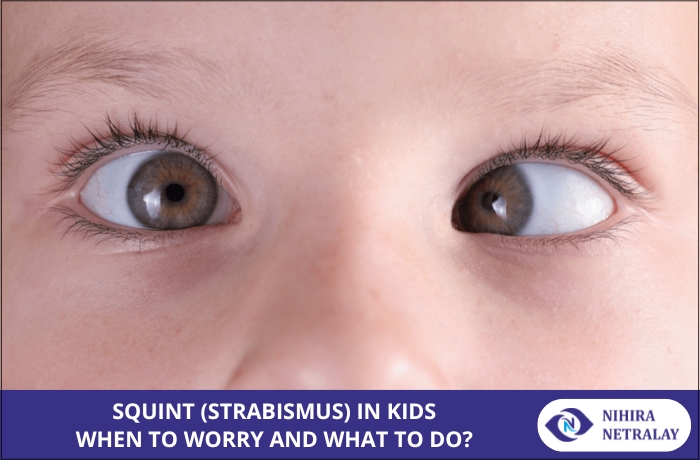
If you’ve ever noticed your child’s eyes not looking in the same direction, you might have wondered if it’s normal or something to worry about. This condition is called squint (medically known as strabismus), and it’s quite common in children. The good news is that with early diagnosis and proper treatment, most kids can develop normal vision.
What is Squint (Strabismus)?
Squint is a condition where both eyes do not align properly. One eye may look straight ahead while the other turns:
- Inward (cross-eye)
- Outward
- Upward or downward
This happens because the eye muscles are not working together as they should.
Is Squint Normal in Kids?
In newborns, occasional eye misalignment is common because their eye muscles are still developing. However:
- If it persists after 3–4 months of age, it should be checked.
- Constant squint at any age is not normal.
Common Causes of Squint in Children
- Weak or uncoordinated eye muscles
- Refractive errors (like farsightedness)
- Family history of squint
- Nerve problems affecting eye movement
- Eye injuries or underlying health conditions
Signs Parents Should Watch For
Early detection is key. Look out for:
- Eyes not moving together
- One eye turning in or out consistently
- Frequent blinking or squinting
- Tilting or turning the head to look at things
- Closing one eye in bright light
When Should You Worry?
You should consult an eye specialist if:
- The squint is constant or getting worse
- It continues after your baby is 4 months old
- Your child complains of double vision or blurry vision
- There is a family history of eye problems
Ignoring squint can lead to lazy eye (amblyopia), where vision in one eye becomes weak permanently.
What Happens if Squint is Left Untreated?
If not treated on time:
- The brain may ignore signals from the weaker eye
- Permanent vision loss can occur in one eye
- Depth perception (3D vision) may be affected
Early treatment can prevent these complications.
Treatment Options for Squint
Treatment depends on the cause and severity:
1. Glasses : If squint is due to refractive errors, wearing glasses can correct alignment.
2. Eye Patching : Covering the stronger eye helps improve vision in the weaker eye.
3. Eye Exercises : In some cases, exercises can strengthen eye muscles.
4. Medications : Rarely used, but helpful in specific conditions.
5. Surgery : If other treatments don’t work, surgery can align the eye muscles. It is safe and commonly performed in children.
Can Squint Be Prevented?
Not all cases can be prevented, but you can reduce risks by:
- Getting your child’s eyes checked early
- Watching for symptoms
- Following treatment plans properly
Why Early Treatment Matters
The earlier squint is treated, the better the outcome. Children’s eyes are still developing, so timely intervention can:
- Restore proper alignment
- Improve vision
- Boost confidence and appearance
About Dr. Ankita Patil – Squint Eye Specialist in Navi Mumbai
Dr. Ankita Patil is a highly experienced squint (strabismus) specialist in Navi Mumbai, dedicated to diagnosing and treating eye alignment issues in children and adults. With a patient-friendly approach and advanced treatment methods, she focuses on early detection and personalized care to ensure the best visual outcomes. If you notice any signs of squint in your child, consulting Dr. Ankita Patil can help you take the right steps toward protecting your child’s vision and confidence.
FAQs About Squint in Kids
1. At what age should squint be treated?
Squint should be evaluated as early as possible, especially if it persists after 3–4 months of age.
2. Can squint go away on its own?
Occasional squint in newborns may resolve, but persistent squint usually needs treatment.
3. Is squint surgery safe for children?
Yes, it is a safe and commonly performed procedure with good success rates.
4. Will my child need to wear glasses forever?
It depends on the cause. Some children may need glasses long-term, while others may not.
5. Can squint affect my child’s studies?
Yes, untreated squint can affect vision, focus, and learning ability.