
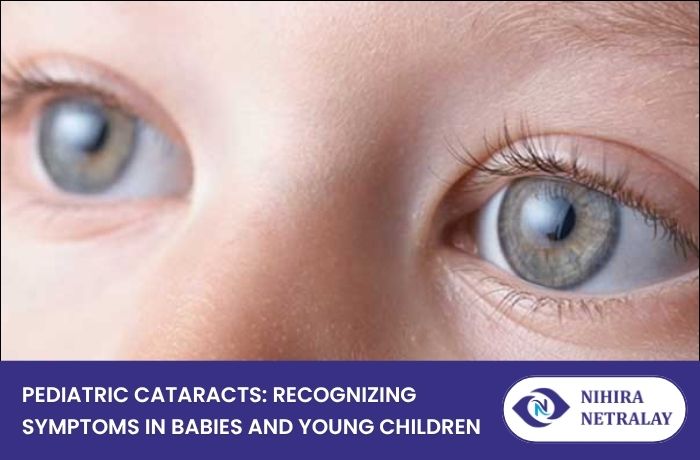
Cataracts are often associated with older adults, but babies and young children can also develop cataracts. Pediatric cataracts occur when the normally clear lens of the eye becomes cloudy, affecting how light reaches the retina. If a cataract is present during early childhood, timely diagnosis and treatment are especially important because vision is still developing.
Parents may not always notice an eye problem immediately, particularly when a child is too young to describe what they see. Knowing the early warning signs can help parents seek an eye examination at the right time.
What Are Pediatric Cataracts?
A cataract is a clouding of the eye’s natural lens. In children, cataracts may be present at birth, known as congenital cataracts, or develop later during infancy or childhood.
Some pediatric cataracts are small and may not significantly affect vision. Others can interfere with normal visual development. Depending on the child’s age, the size and location of the cataract, and its effect on vision, an eye specialist may recommend monitoring, glasses, or treatment such as cataract surgery.
Common Symptoms of Cataracts in Babies and Children
Recognizing symptoms early can be challenging. Here are some signs parents should watch for:
1. A White or Grey Appearance in the Pupil
One of the most noticeable warning signs is a white or cloudy reflection in the pupil instead of the usual dark appearance. Parents may notice this particularly in photographs taken with flash.
A white pupil should not be ignored. It can have several possible causes, some of which require urgent evaluation by an eye specialist.
2. Eyes That Do Not Move Together
A child with reduced vision in one eye may develop squinting or crossed eyes (strabismus). One eye may appear to turn inward, outward, upward, or downward.
Although occasional eye crossing can occur in very young babies, persistent or unusual eye deviation should be assessed.
3. Difficulty Following Objects
Babies normally begin following faces, lights, or moving objects as their vision develops. If a baby does not seem to track objects appropriately or does not respond visually to familiar faces, parents should discuss this with a pediatric eye specialist.
4. Frequent Squinting or Closing One Eye
Older children with cataracts may squint, close one eye, or turn their head in a particular direction to see more clearly. They may also experience difficulty seeing in bright light.
These behaviors can sometimes be mistaken for simple habits, but repeated occurrences deserve attention.
5. Unusual Eye Movements
Some children with significant vision problems may develop involuntary, repetitive eye movements, known as nystagmus. This may appear as the eyes moving from side to side or in another repetitive pattern.
Nystagmus can have different causes, so a comprehensive eye examination is important.
6. Delayed Visual Development
Parents may notice that a child does not seem to recognize objects from a normal distance, has difficulty reaching accurately for toys, or struggles with visually guided activities.
In toddlers and young children, difficulty with activities that require good vision may sometimes indicate an underlying eye condition.
What Causes Cataracts in Children?
Pediatric cataracts can have different causes. Some children are born with cataracts due to genetic factors or conditions affecting eye development. Cataracts can also develop after an eye injury, inflammation, certain medical conditions, or other eye problems. In some cases, the exact cause may not be identified.
Because the causes vary, children diagnosed with cataracts may need a detailed eye examination and, depending on the situation, additional evaluation.
Why Early Diagnosis Matters
Vision develops rapidly during the early years of life. When one or both eyes are unable to receive a clear image, the brain may not develop normal vision from that eye. This can lead to amblyopia, commonly called lazy eye.
The earlier a significant cataract is identified, the sooner an appropriate treatment plan can be considered. Not every pediatric cataract requires immediate surgery, but every suspected cataract should be properly evaluated.
When Should Parents See an Eye Specialist?
Parents should arrange an eye examination if they notice a white pupil, persistent squinting, unusual eye movements, eyes that do not align properly, poor visual tracking, or other changes in a child’s vision.
If a child suddenly develops a white-looking pupil or there is a sudden change in vision, prompt medical assessment is important.
Regular eye examinations can also help identify problems that may not produce obvious symptoms. Children often cannot explain that their vision is blurry, so professional screening plays an important role in protecting healthy visual development.
Pediatric Cataract Treatment
Treatment depends on the child’s age, the severity and location of the cataract, and how much it affects vision. Some cataracts may simply be monitored, while significant cataracts may require surgery.
When surgery is recommended, the ophthalmologist will discuss the procedure and the child’s visual rehabilitation needs. Follow-up care is an important part of treatment because children’s eyes and vision continue to develop.
Dr. Ankita Patil – Cataract Specialist in Navi Mumbai
Parents looking for a Cataract Specialist in Navi Mumbai can consult Dr. Ankita Patil, an experienced ophthalmologist with expertise in pediatric eye care. Dr. Ankita Patil focuses on the evaluation and management of children’s eye conditions and can help parents understand symptoms such as cloudy pupils, squinting, abnormal eye movements, or difficulty seeing. If you notice any unusual changes in your child’s eyes or vision, an early ophthalmic evaluation can help identify the problem and guide appropriate treatment.
FAQs
1. Can babies be born with cataracts?
Yes. Cataracts can be present at birth and are called congenital cataracts.
2. What does a pediatric cataract look like?
A cloudy or white-looking pupil can be a warning sign.
3. Can children develop cataracts later?
Yes. Cataracts may develop during infancy or childhood for several reasons.
4. Do all childhood cataracts require surgery?
No. Treatment depends on the cataract’s size, location, and effect on vision.
5. When should I take my child for an eye check-up?
If you notice a white pupil, squinting, unusual eye movements, or poor visual tracking, arrange an eye examination promptly.